

Plantar Fasciitis is one of the most common causes of heel pain. It occurs when the plantar fascia — a thick band of tissue connecting your heel to the front of your foot — becomes inflamed or strained. This ligament supports your foot’s arch and acts as a natural shock absorber.
According to a 2024 study published in the Journal of Foot & Ankle Research, plantar fasciitis accounts for nearly 10% of running-related injuries worldwide, making it a major cause of chronic foot pain.
Causes of Plantar Fasciitis
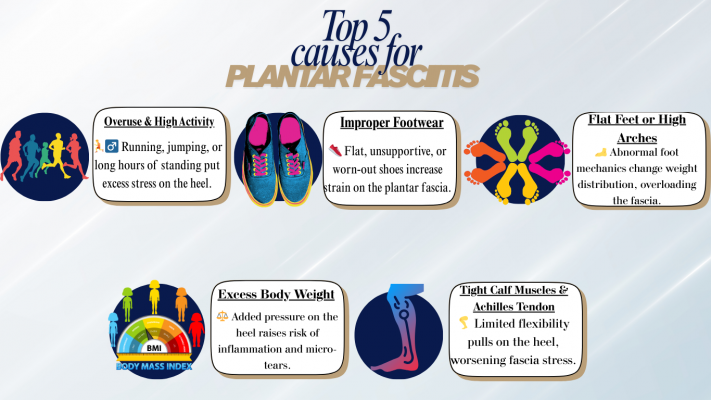
Plantar Fasciitis usually develops from repetitive strain and stress on the ligament, leading to tiny tears and inflammation.
You may be at higher risk if you have:
High-arched or rigid feet
Flat or overpronated feet
Obesity or sudden weight gain
Poorly cushioned footwear
A new exercise routine on hard surfaces
Tight calves or Achilles tendon
Occupations requiring long hours of standing (factory workers, teachers, healthcare professionals)
Sports involving running, jumping, or dancing
Symptoms of Plantar Fasciitis
Plantar Fasciitis pain develops gradually. Some describe it as sharp or stabbing, while others report a burning or aching sensation under the heel.
Typical signs include:
Pain with your first steps in the morning
Heel pain after long hours of standing or walking
Pain that eases during exercise but worsens afterward
Difficulty raising toes off the floor
Stiffness and swelling in the heel or arch
If heel pain lasts more than 2 weeks, it may be plantar fasciitis rather than temporary soreness.
Risk Factors
Your likelihood of developing Plantar Fasciitis increases with:
Age: Most common between 40–70 years old
Sports & exercise: Running, soccer, basketball, or dancing
Weight: Excess body weight increases heel stress
Occupation: Jobs with prolonged standing or walking
Foot mechanics: Flat feet, high arches, or abnormal gait patterns
Prevention & Self-Care Tips
Prevention is often the best treatment. With consistent care, you can reduce strain on your plantar fascia:
👟 Wear proper shoes: Choose cushioned footwear or custom insoles for support.
🧊 Apply ice: 15–20 minutes after activity to reduce inflammation.
🧘 Stretch daily: Focus on calves, Achilles tendon, and plantar fascia.
💤 Use night splints: Keeps fascia stretched overnight, easing morning pain.
🏊 Switch to low-impact workouts: Swimming, cycling, or yoga.
⚖️ Maintain a healthy weight: Reduces pressure on your feet.
🩹 Athletic taping: Supports ligaments and reduces tension.
Non-Surgical Treatments at Wellness Philosophy
At Wellness Philosophy Singapore, we provide evidence-based therapies to relieve plantar fasciitis without surgery.
1. Shockwave Therapy
A clinically advanced, non-invasive treatment that stimulates blood flow, reduces inflammation, and breaks down scar tissue. Studies in 2024 (British Journal of Sports Medicine) confirm that shockwave therapy improves recovery in 70–80% of chronic plantar fasciitis patients.
2. Physical Therapy & Neuromuscular Rehabilitation
Our physiotherapists design programs to:
Correct muscle imbalances
Improve gait and posture
Strengthen foot and calf muscles
Increase mobility in the Achilles and plantar fascia
3. Nutritional Supplements for Joint & Tissue Health
Innate Care: Hyaluronic Acid + Type II Collagen → lubricates joints, improves flexibility, supports cartilage repair.
Glucosamine & Chondroitin → protect cartilage and improve shock absorption.
Vitamin D3 & B12 (recommended with GP consultation) → support bone density and reduce fatigue from chronic pain.
FAQs About Plantar Fasciitis
Q1: How do I know if I have plantar fasciitis or a heel spur?
Plantar fasciitis pain is worst in the morning and improves with movement. Heel spurs are calcium deposits that may show up on X-rays but don’t always cause pain.
Q2: Does plantar fasciitis go away on its own?
Mild cases may resolve within months, but chronic plantar fasciitis often requires therapy and lifestyle changes.
Q3: When should I see a doctor?
If pain persists beyond 2 weeks, worsens at night, or prevents walking, seek professional evaluation.
Q4: Is surgery ever needed?
Less than 5% of cases require surgery. Most patients improve with physiotherapy, shockwave therapy, and proper footwear.
Take the First Step Toward Pain-Free Living
Heel pain doesn’t have to slow you down. At Wellness Philosophy Singapore, we specialize in non-surgical plantar fasciitis treatments that restore mobility and quality of life.
📞 Call us today at 6223-7170 or book a consultation online to begin your recovery.
